



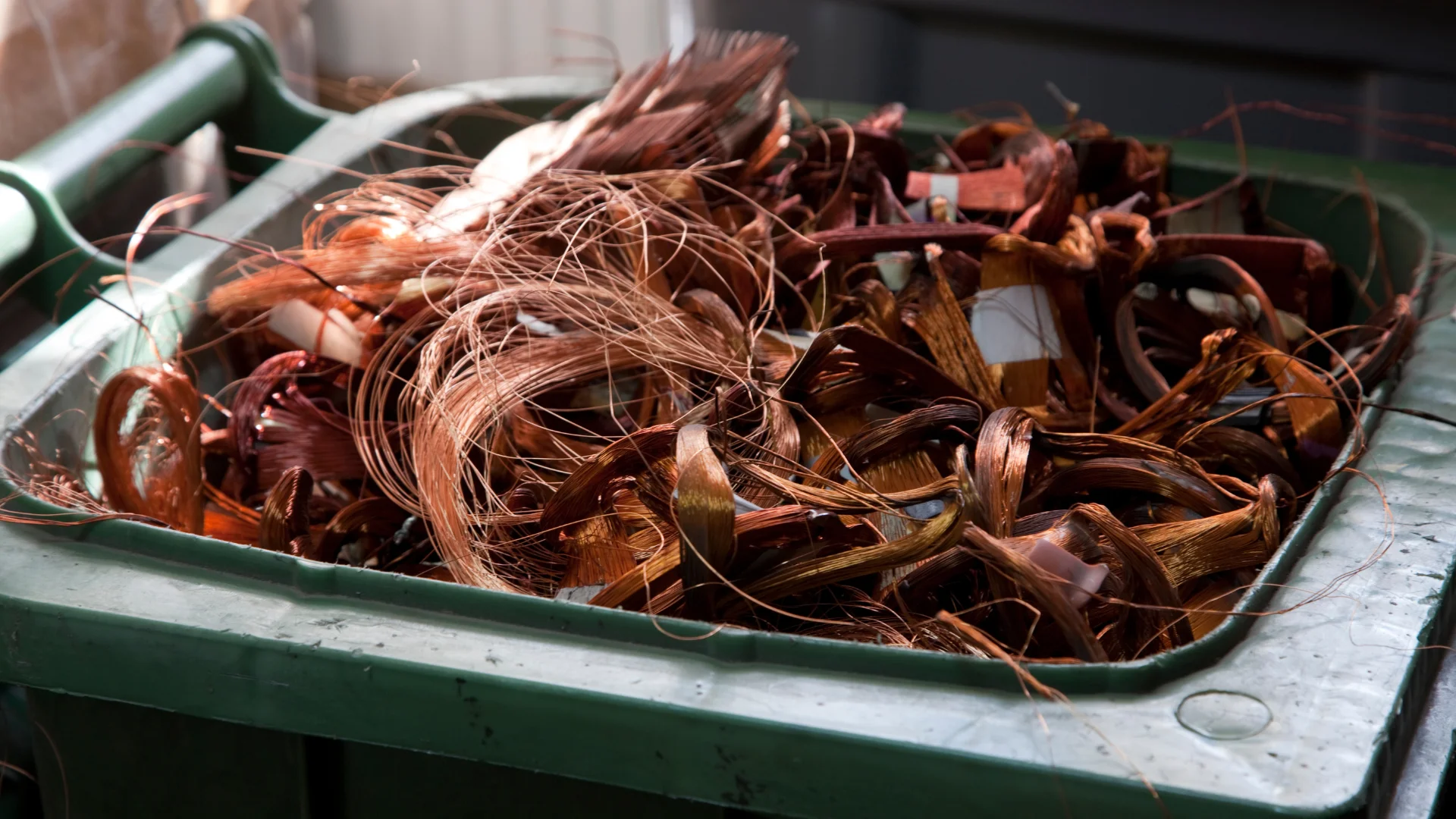
Copper recycling is one of the most strategic processes within the metals recycling sector, both because of its high economic value and its industrial importance. Copper is in high demand in sectors such as electricity, electronics, the automotive industry and construction, and one of its main advantages is that it can be recycled repeatedly without losing any of its quality or conductive properties.
Furthermore, it enables metal waste to be transformed into a high-value secondary raw material. Factors such as the price of recycled copper, its high conductivity and its widespread reuse make copper recycling a profitable and sustainable activity.
Thanks to advanced processes and specialized machinery, copper for recycling can be sorted, cleaned and processed to produce high-quality material suitable for new industrial applications.
Copper scrap refers to any metallic waste containing copper of varying degrees of purity: electrical cables, plumbing pipes, motor windings, electronic connectors and industrial components. Mechanical processing using specialized machinery enables the recovery of high-purity recycled copper suitable for sale or reuse in new production processes.
At Silmisa, we manufacture the equipment needed to efficiently shred, palletized and separate copper scrap, tailoring each solution to the type of scrap and the customer’s production volume.
The copper recycling process is an industrial treatment designed to recover a material of high economic and technical value from various types of copper waste. This industrial process is usually divided into several stages, including: reception, sorting, size reduction, separation, cleaning and preparation of the material for reuse or further processing.
The first stage in the copper recycling process is the proper management and sorting of waste. Copper for recycling can come from a variety of sources: electrical cables, industrial scrap, waste from installations, electronic components or mixed waste.
Once the treatment process is complete, recycled copper of a high degree of purity is obtained, suitable for reuse in a wide range of industrial applications. Furthermore, the material obtained offers the same performance characteristics as primary copper.
At Silmisa, we manufacture machinery for recycling copper and copper scrap, offering solutions tailored to the type of waste and the capacity of each plant. Our equipment processes copper cable, electronic waste and scrap from installations with high efficiency and low operating costs.
For the processing of this material we work with:
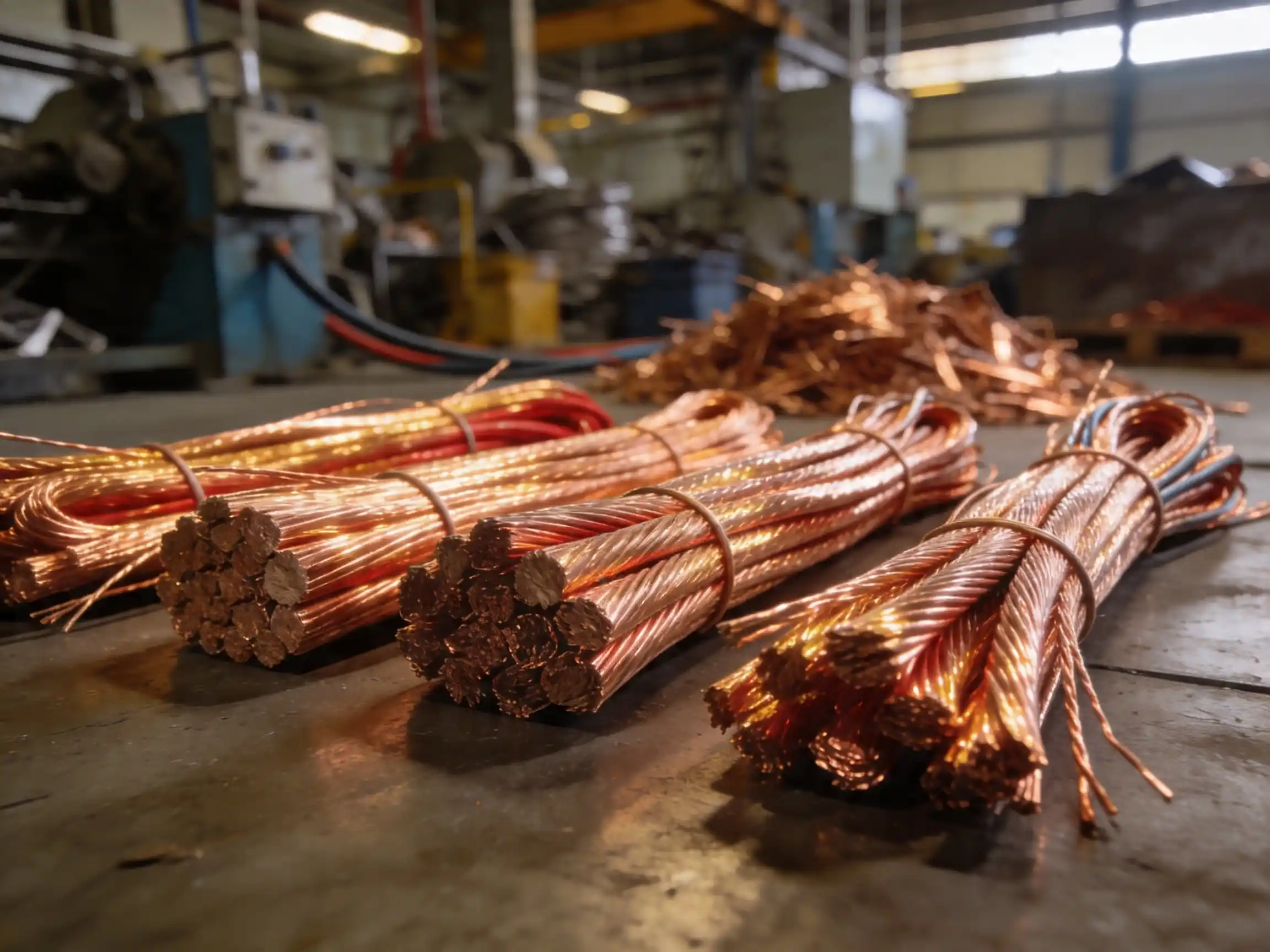
Pre-shredders for copper recycling
They play a key role in the initial phase of the copper recycling process, especially when working with bulky waste, compacted cables, electrical scrap, or complex mixtures.
Copper crushers
They allow for the reduction of the size of the previously prepared material, obtaining a more manageable and uniform fraction. This stage is fundamental for improving the efficiency of subsequent separation and cleaning processes.
Granulators for copper
Essential when greater metal release and precise particle size distribution are required. These systems allow for the efficient separation of copper from other associated materials such as plastics or coatings.
Separation systems
These steps are crucial for achieving high levels of purity in recycled copper. In this phase, unwanted materials are removed and metal recovery is maximized.
Conveyor belt
It ensures the safe, continuous and stable transport of materials throughout the copper recycling line.
Complete copper recycling line
We manufacture fully integrated lines tailored to each client’s needs. These lines combine pre-crushing, crushing, granulation, separation, and conveying in an automated and efficient process.
